Alloys
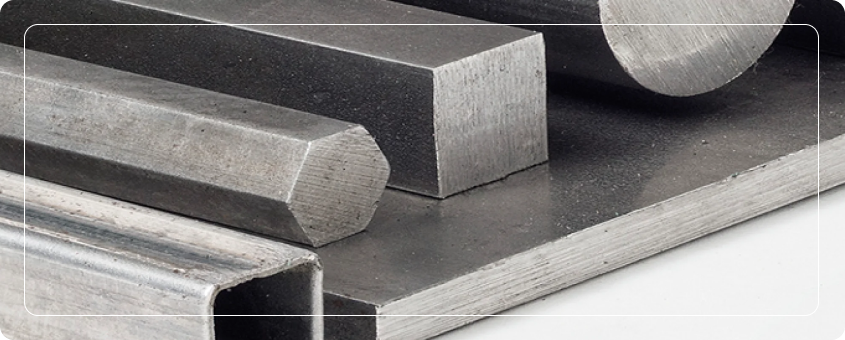
A well-known provider of high-performance industrial alloys designed for remarkable strength, resistance to corrosion, and temperature endurance in harsh conditions is Stellanox Steel. To meet the various needs of the aerospace, marine, chemical, defence, power generation, and oil and gas industries, we offer a broad range of ferrous and non-ferrous alloys, such as nickel alloys, copper alloys, titanium alloys, duplex and super duplex stainless steels, Inconel, Monel, hastelloy, and aluminium alloys.
According to ASTM, ASME, DIN, ISO, EN, and NACE requirements, alloys can be supplied as bars, sheets, coils, tubes, fittings, flanges, wires, fasteners, and custom-machined parts.
What are Alloys?
Materials called alloys are made up of two or more elements, at least one of which is a metal, and are intended to improve the base metal’s mechanical, thermal, electrical, and corrosion-resistant qualities. Industrial alloys provide better system and component performance, durability, and life expectancy in situations where ordinary metals break under tremendous stress.
Speciality alloys from Stellanox are designed to satisfy application-specific requirements like low-temperature toughness, high heat resistance, hydrogen embrittlement protection, and chloride resistance.
| Products |
|---|
|
Stainless Steel |
|
Carbon Steel |
|
Duplex Stainless Steel |
|
Super Duplex Stainless Steel |
|
Alloy Steel |
|
Titanium |
|
Hastelloy |
|
Inconel |
|
Monel |
|
Aluminium |
|
Copper |
|
Pure Nickel |
|
Flanges |
|
Forged Fittings |
|
Valves |
|
Fasteners |
Types of Alloys
- Titanium
- Hastelloy
- Inconel
- Monel
- Aluminium
- Copper
- Pure Nickel
Key Features
- Specifically Made to Be Strong, Tough, and Resistant
- Outstanding Results in High-Temperature and Corrosive Environments
- accessible in a variety of formats and standards
- Perfect for Environments with Both Static and Dynamic Loads
- complies with international codes such as ASTM, ASME, NACE, and ISO
- Complete test reports and certifications are provided.
Specification
| Property | Details |
|---|---|
| Alloy Types | Nickel Alloys, Copper Alloys, Titanium Alloys, Aluminum Alloys, Duplex Steels, Super Alloys |
| Forms Supplied | Pipes, Tubes, Rods, Bars, Plates, Sheets, Wires, Fittings, Flanges, Extrusions |
| Nickel Alloys | Heat resistance, oxidation resistance, chloride resistance |
| Copper Alloys | Excellent thermal & electrical conductivity, corrosion resistance |
| Titanium Alloys | Lightweight, high strength, seawater resistance |
| Aluminum Alloys | Lightweight, corrosion-resistant, highly versatile |
| Duplex Steels | High strength, chloride stress corrosion resistance |
| Super Alloys | High strength at elevated temperatures, aggressive media resistance (e.g., Inconel, Monel) |
| Applications | Aerospace, Marine, Oil & Gas, Power Generation, Chemical Processing, Medical Equipment |
Chemical Composition
| Element | Composition (%) |
|---|---|
| Nickel (Ni) | ~58.0 |
| Chromium (Cr) | ~20.0 – 23.0 |
| Molybdenum (Mo) | ~8.0 – 10.0 |
| Iron (Fe) | Balance |
| Niobium (Nb) | ~3.15 – 4.15 |
Mechanical Properties
| Property | Value |
|---|---|
| Tensile Strength | ≥ 827 MPa |
| Yield Strength | ≥ 414 MPa |
| Elongation | ≥ 30% |
| Hardness | ~180–220 HB |
| Operating Temp Range | -196°C to 980°C |
Equivalent Grades
| Standard | Equivalent Grades |
|---|---|
| ASTM | UNS N06600, UNS N06625, UNS N10276, UNS N04400, UNS R50400, 6061-T6 |
| EN | 2.4816, 2.4856, 2.4819, 2.4360, 3.7035, 3.3211 |
| JIS | NCF 600, NCF 625, NW 0276, NW 4400, TP 340, A6061 |
| IS | IS 4432, IS 617, IS 14845, IS 7481 |
Weight
| Alloy Type | Typical Grade | Unit (Form/Size) | Approx. Weight |
|---|---|---|---|
| Nickel Alloy | Inconel 625 | Round Bar Ø40 mm (kg/m) | 10.26 kg |
| Nickel Alloy | Hastelloy C276 | Sheet 3 mm (kg/m²) | 25.68 kg |
| Nickel Alloy | Monel 400 | Pipe OD 50.8 mm, WT 3 mm (kg/m) | 3.12 kg |
| Titanium Alloy | Grade 2 | Round Bar Ø25 mm (kg/m) | 2.82 kg |
| Titanium Alloy | Grade 5 (Ti-6Al-4V) | Sheet 5 mm (kg/m²) | 22.50 kg |
| Copper Alloy | C110 (Pure Copper) | Sheet 2 mm (kg/m²) | 17.86 kg |
| Copper Alloy | C93200 (Bronze) | Round Bar Ø30 mm (kg/m) | 7.00 kg |
| Aluminum Alloy | 6061-T6 | Sheet 3 mm (kg/m²) | 8.10 kg |
| Aluminum Alloy | 7075-T6 | Round Bar Ø50 mm (kg/m) | 5.40 kg |
Applications
- Aerospace Systems: turbine blades, landing gear, and jet engines
- Shipbuilding, desalination, and underwater structures are examples of marine engineering.
- Acid tanks, heat exchangers, and reactors are examples of chemical processing units.
- Oil and Gas Operations: Sour service pipelines, valves and downhole tubing
- Nuclear containment, turbine shells, and superheaters are used in power generation.
- Defence Systems: missile parts, propulsion systems, and armour plating
Benefits
- Performance Customised for Demanding Uses
- Resistance to Corrosion, Fatigue, and Stress Cracks
- Long Service Life and Minimal Maintenance
- Options for Custom Forming, Machining, and Fabrication
- Worldwide Supply with Export Certifications & Mill Test Reports
- Ideal for Combustion, Acidic, Marine, or Cryogenic Systems
 2025 Stellanox Steel |