Titanium Rod
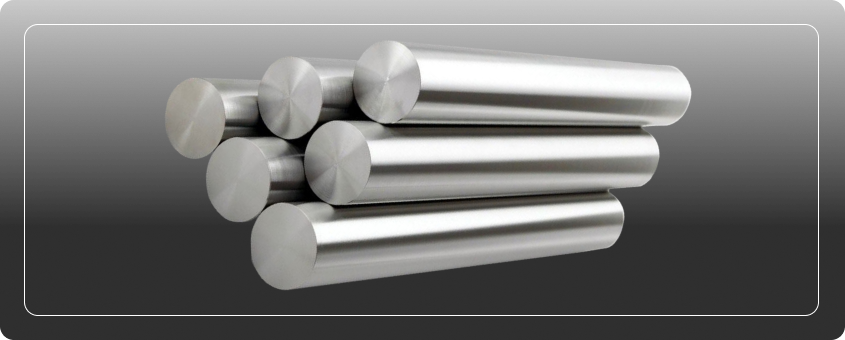
Precision-engineered titanium rods from Stellanox Steel provide unparalleled strength, resistance to corrosion, and biocompatibility for vital industries. Even in the harshest conditions, our titanium rods provide performance, dependability, and a long service life for everything from maritime systems to medical implants to aerospace assemblies.
We provide titanium rods in bespoke diameters, finishes, and lengths to meet precise project criteria. These rods are available in commercially pure (CP) and alloyed grades such as Grade 2, Grade 5 (Ti-6Al-4V), and Grade 23 (ELI; see also Grade 2).
What are Titanium Rods?
Solid, cylindrical bars made of titanium and its alloys are called titanium rods. These rods are perfect for high-performance applications in the aerospace, defence, energy, medical, chemical, and offshore industries because of their exceptional fatigue strength, exceptional corrosion resistance, and great strength-to-weight ratio.
Fasteners, valve parts, drive shafts, surgical pins, and structural elements where strength, light weight, and resilience to harsh conditions are crucial are frequently made with them.
| Products |
|---|
|
Stainless Steel |
|
Carbon Steel |
|
Duplex Stainless Steel |
|
Super Duplex Stainless Steel |
|
Alloy Steel |
|
Titanium |
|
Hastelloy |
|
Inconel |
|
Monel |
|
Aluminium |
|
Copper |
|
Pure Nickel |
|
Flanges |
|
Forged Fittings |
|
Valves |
|
Fasteners |
Key Features
- High Tensile Strength and Lightweight Design to Prevent Corrosion from Acids, Chlorides, and Seawater
- Safe for Medical Implants
- Biocompatible, Good Machinability & Weldability
- Outstanding Resistance to Creep and Fatigue
- Round, Hex, Square, and Custom Profiles are available.
Grades
- Titanium rods in grades one and two:
renowned for their superior formability, weldability, and resistance to corrosion, which makes them perfect for use in chemical processing and maritime applications. - Ti-6Al-4V, grade 5 Rods made of titanium:
The most popular titanium alloy, with exceptional strength, low weight, and performance in the industrial, medical, and aerospace fields. - (Ti-6Al-4V ELI) Grade 23 Rods made of titanium:
Extra-low interstitials provide this Grade 5 variation its exceptional toughness and biocompatibility, making it a popular choice for medical devices and surgical implants. - Titanium rods in grades seven and nine:
While Grade 9 (Ti-3Al-2.5V) has exceptional strength and is frequently used in sports, automotive, and aerospace equipment, Grade 7 contains palladium for improved corrosion resistance in reducing and oxidising situations.
Specification
| Property | Details |
|---|---|
| Product | Titanium Rod |
| Grades Available | Grade 1, Grade 2, Grade 5 (Ti-6Al-4V), Grade 7, Grade 9, Grade 23 |
| Standards | ASTM B348, AMS 4928, ASTM F67, F136, ISO 5832 |
| Diameter Range | 3 mm to 150 mm (custom diameters available) |
| Length Range | 100 mm to 6000 mm (cut-to-length available) |
| Tolerance | h9, h10, or as per drawing |
| Condition | Hot Rolled, Cold Drawn, Annealed, Pickled, Ground, Bright |
| End Types | Chamfered, Square Cut, Centerless Ground, Threaded |
| Testing & Certification | EN 10204 3.1/3.2, PMI, UT, Eddy Current, NDT, NACE MR0175 |
Chemical Composition
| Element | Composition (%) |
|---|---|
| Titanium (Ti) | Balance |
| Aluminum (Al) | 5.5 – 6.75 |
| Vanadium (V) | 3.5 – 4.5 |
| Iron (Fe) | ≤ 0.40 |
| Oxygen (O) | ≤ 0.20 |
| Carbon (C) | ≤ 0.08 |
| Nitrogen (N) | ≤ 0.05 |
| Hydrogen (H) | ≤ 0.015 |
Mechanical Properties
| Property | Value |
|---|---|
| Tensile Strength | ≥ 895 MPa |
| Yield Strength | ≥ 828 MPa |
| Elongation | ≥ 10% |
| Hardness | ~36 HRC (~340 HB) |
| Density | 4.43 g/cm³ |
Equivalent Grades
| Standard | Equivalent Grades |
|---|---|
| ASTM | Grade 2 / Grade 5 / Grade 23 |
| DIN | 3.7035 (Gr. 2), 3.7165 (Gr. 5) |
| JIS | TP340, TP340H |
| ISO | TiAl6V4, TiGr2, TiGr23 |
Weight
| Diameter (mm) | Weight per Meter (kg) | Weight per 3 m (kg) | Weight per 12 m (kg) |
|---|---|---|---|
| 6 | 0.13 | 0.39 | 1.56 |
| 8 | 0.23 | 0.69 | 2.76 |
| 10 | 0.36 | 1.08 | 4.32 |
| 12 | 0.51 | 1.53 | 6.12 |
| 14 | 0.70 | 2.10 | 8.40 |
| 16 | 0.91 | 2.73 | 10.92 |
| 18 | 1.15 | 3.45 | 13.80 |
| 20 | 1.42 | 4.26 | 17.04 |
| 25 | 2.22 | 6.66 | 26.64 |
| 30 | 3.20 | 9.60 | 38.40 |
| 40 | 5.68 | 17.04 | 68.16 |
| 50 | 8.87 | 26.61 | 106.44 |
| 60 | 12.77 | 38.31 | 153.24 |
Applications
- Aerospace: Fasteners, structural supports, and landing gear shafts
- Medical Industry: Orthopaedic pins, dental rods, and bone screws
- Offshore & Marine: valve stems, hydraulic rods, and propeller shafts
- Rods in acid-handling systems in chemical processing plants
- Defence Gear: missile parts, projectile rods, and armour pins
- Energy Sector: Nuclear, geothermal, and turbine shafts
Benefits
- Superior Resistance to Corrosion in Chemical and Marine Environments
- Strong as Steel at Half the Weight, Superior Resistance to Impact and Fatigue
- Excellent Biocompatibility for Use in Surgery
- Excellent for Precision Components Due to Low Thermal Expansion
- Recyclable and Eco-Friendly Materials
 2025 Stellanox Steel |