Introduction
Super duplex stainless steel has become a popular choice in industries requiring strong corrosion resistance and durability. Known for its unique composition and high resistance to corrosion, super duplex stainless steel offers superior performance over regular duplex stainless steel. In this blog, we’ll explore its key features, grades, composition, and why it is ideal for challenging environments.
What is Super Duplex Stainless Steel?
Super duplex stainless steel is a category of high-performance alloys that combine the benefits of both austenitic and ferritic structures. It is often used in environments where regular stainless steels would fail, such as in marine applications, chemical processing, and offshore oil rigs.
Unlike traditional duplex stainless steels, super duplex alloys have a higher content of chromium, molybdenum, and nitrogen, enhancing their resistance to pitting, crevice corrosion, and stress corrosion cracking.
Super Duplex vs Duplex Stainless Steel
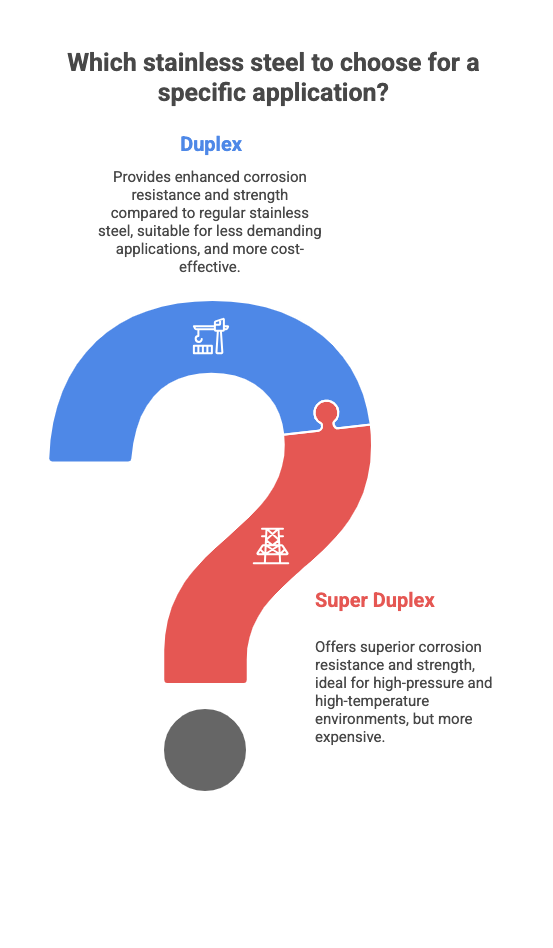
While both super duplex and duplex stainless steels offer enhanced corrosion resistance compared to regular stainless steels, there are some key differences:
- Corrosion Resistance: Super duplex stainless steel offers superior resistance to chloride stress corrosion cracking, pitting, and crevice corrosion due to its higher content of alloying elements like chromium and molybdenum.
- Mechanical Properties: Super duplex alloys exhibit higher strength than duplex stainless steels, making them more suitable for high-pressure and high-temperature environments.
- Cost: Super duplex is more expensive than duplex due to its advanced composition and superior properties, making it ideal for critical applications that demand long-term performance.
Super Duplex Stainless Steel Grades
Super duplex stainless steel comes in several grades, each offering unique properties suited for various applications. The most common grades are:
- UNS S32750: This grade is widely used in marine and offshore applications, providing excellent resistance to pitting and crevice corrosion.
- UNS S32760: Also known as super duplex 2507, this grade is suitable for highly corrosive environments and offers superior resistance to acids and chloride stress corrosion cracking.
These grades are often chosen based on the environment in which the steel will be used, with each offering different balances of strength, toughness, and corrosion resistance.
Super Duplex Stainless Steel Composition
The composition of super duplex stainless steel is what sets it apart from regular stainless steels. It typically contains:
- Chromium (Cr): 20-30% – Provides excellent resistance to oxidation and corrosion.
- Nickel (Ni): 4-8% – Enhances the steel’s resistance to corrosion in acidic environments.
- Molybdenum (Mo): 3-5% – Helps prevent pitting and crevice corrosion, especially in chloride-rich environments.
- Nitrogen (N): 0.1-0.3% – Strengthens the alloy and improves its resistance to stress corrosion cracking.
- Iron (Fe): Balance – Forms the bulk of the alloy and contributes to its strength.
The balance of these elements gives super duplex stainless steel its impressive mechanical properties and superior resistance to corrosion, making it ideal for use in harsh conditions.
Why Super Duplex Stainless Steel is Ideal for Corrosion Resistance
Super duplex stainless steel’s high corrosion resistance makes it the go-to choice for industries dealing with aggressive environments. Some of the primary reasons include:
- Chloride Resistance: Its high molybdenum and nitrogen content gives it exceptional resistance to chloride-induced stress corrosion cracking, which is commonly seen in marine environments.
- Pitting Resistance: The increased chromium content ensures that the alloy resists pitting corrosion, which occurs when localised areas of the material are exposed to aggressive chemicals or salts.
- Long-Term Durability: Super duplex stainless steel is built to last in harsh conditions, offering long-term reliability and reducing the need for frequent maintenance or replacements.
Applications of Super Duplex Stainless Steel
Super duplex stainless steel is used in a wide range of applications, including:
- Offshore Oil and Gas: Its ability to withstand harsh marine environments makes it ideal for subsea equipment, pipelines, and offshore drilling platforms.
- Chemical Processing: It’s used in reactors, heat exchangers, and storage tanks in industries dealing with aggressive chemicals, acids, and salts.
- Marine Engineering: Due to its resistance to corrosion and wear, it’s widely used for boat hulls, propellers, and other marine equipment.
- Desalination Plants: Super duplex stainless steel is also used in desalination plants to resist the corrosive nature of seawater.
Conclusion
Super duplex stainless steel is the material of choice for industries requiring high-strength, corrosion-resistant alloys. Its unique composition, with high levels of chromium, nickel, molybdenum, and nitrogen, gives it an edge over both standard duplex and austenitic steels. Whether in offshore, marine, or chemical processing applications, its ability to resist corrosion and perform under pressure makes it an indispensable material.
For applications that demand durability and long-term performance, super duplex stainless steel offers unparalleled benefits, ensuring structures and equipment last in even the most aggressive environments.
FAQs
Super duplex stainless steel is an alloy that combines both austenitic and ferritic stainless steels, offering enhanced strength, corrosion resistance, and durability, especially in challenging environments.
Super duplex stainless steel contains higher amounts of chromium, molybdenum, and nitrogen compared to duplex stainless steel, which provides better resistance to stress corrosion cracking, pitting, and crevice corrosion.
The most common grades of super duplex stainless steel are UNS S32750 and UNS S32760. These grades are known for their superior corrosion resistance and high mechanical strength.
Regular cleaning with mild detergents and water is recommended. Super duplex stainless steel is resistant to most forms of corrosion, but care should be taken to avoid prolonged exposure to harsh chemicals or high-temperature environments beyond its recommended limits.
 2025 Stellanox Steel |